
The “Aatmanirbhar” Chip: Hyderabad & India’s 2026 Semiconductor Leap
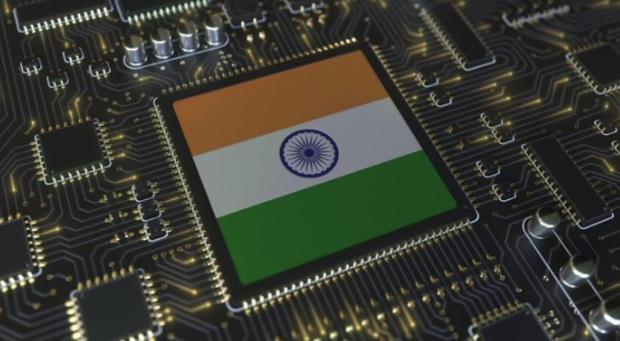
As we cross the first quarter of 2026, the global semiconductor map is being redrawn, and India is no longer just a dot on the horizon—it’s a central hub. While 2024 was about “intent” and 2025 about “pilots,” 2026 is the year of commercial reality. From the rollout of India Semiconductor Mission (ISM) 2.0 to the emergence of indigenous processors, here is how the landscape has transformed for Hyderabad and the nation.
1. The Big Switch: From Pilot to Commercial Production
The most significant trend of 2026 is the transition of major plants into full-scale commercial operations. As of February 2026:
-
Micron, CG Power, and Kaynes Technology have moved beyond trial runs and are now shipping commercially viable chips from their Gujarat units.
-
Tata Electronics’ Assam plant is on track to start pilot production by mid-2026, with a massive capacity of 48 million chips per day.
-
In Hyderabad, the focus has shifted toward Silicon Carbide (SiC) and Compound Semiconductors, critical for the electric vehicle (EV) explosion and 5G/6G infrastructure.
2. ISM 2.0: The “Productization” Focus
The newly announced India Semiconductor Mission 2.0 (Budget 2026–27) has a different DNA than its predecessor. While ISM 1.0 focused on bringing the “big fabs” (manufacturing plants), 2.0 is obsessed with Indian IP (Intellectual Property).
“In Semicon 2.0, the top-most priority will be design companies that can design a product and become the next Qualcomm from India.”
— Ashwini Vaishnaw, Union Minister for IT (Feb 2026)
Key 2026 Targets under ISM 2.0:
-
Support for 50+ Fabless Startups: Expanding the Design Linked Incentive (DLI) scheme to create “Brand India” chips.
-
Specialized Materials: A push to manufacture high-purity chemicals and gases locally to shield the supply chain from global shocks.
-
Advanced Nodes: A roadmap to reach 2nm node size capabilities by 2035.
3. Emerging Trends: RISC-V and Edge AI
India is carving a niche in specific high-growth areas:
-
The RISC-V Revolution: Startups like Vervesemi (which recently raised $10M in Series A) are using the open-source RISC-V architecture to build motor-control chips for drones and EVs, reducing reliance on proprietary Western licenses.
-
Edge AI Integration: Hyderabad’s design centers (AMD, Intel, Qualcomm) are pivoting toward “Edge AI”—chips that allow your phone or car to process AI locally without needing the cloud.
-
Talent Overload: The “1-TOPS” (1 Tape-Out Per Student) initiative has already trained over 67,000 engineers, creating the world’s most aggressive talent pipeline.
4. Regional Specialization: India’s New High-Tech Map
| Hub | Specialization (2026) |
| Hyderabad | AI Silicon & Automotive Design. The “Brain” of the industry. |
| Gujarat (Dholera/Sanand) | Mega-Fabs & Memory. The “Muscle” of manufacturing. |
| Assam | Advanced Packaging. High-volume assembly for the global market. |
| Odisha | Silicon Carbide (SiC) Fabs. Powering the green energy transition. |
5. Challenges: The Power & Water Equation
Despite the euphoria, 2026 has brought infrastructure challenges to the fore. Semiconductor manufacturing is “resource-hungry.” To keep Hyderabad competitive, the state is investing in dedicated power corridors and ZLD (Zero Liquid Discharge) water treatment plants to meet the rigorous environmental standards required for chip fabs.
Conclusion: The Strategic Shift
India’s semiconductor journey is moving from “service-based” (doing work for others) to “product-based” (building our own). With $18.2 billion in total investment approved across 10 major projects, the dream of a “Made in India” processor inside every global smartphone is no longer a “when,” but a “now.”